SECTION VIDEOConsiderations for using cache
COMING SOONVideo coming soon. Start with the reading below.
Here are a few considerations for using a cache system:
- Decide when to use cache. Consider using cache when data is read frequently but modified infrequently. Since cached data is stored in volatile memory, a cache server is not ideal for persisting data. For instance, if a cache server restarts, all the data in memory is lost. Thus, important data should be saved in persistent data stores.
- Expiration policy. It is a good practice to implement an expiration policy. Once cached data is expired, it is removed from the cache. When there is no expiration policy, cached data will be stored in the memory permanently. It is advisable not to make the expiration date too short as this will cause the system to reload data from the database too frequently. Meanwhile, it is advisable not to make the expiration date too long as the data can become stale.
- Consistency: This involves keeping the data store and the cache in sync. Inconsistency can happen because data-modifying operations on the data store and cache are not in a single transaction. When scaling across multiple regions, maintaining consistency between
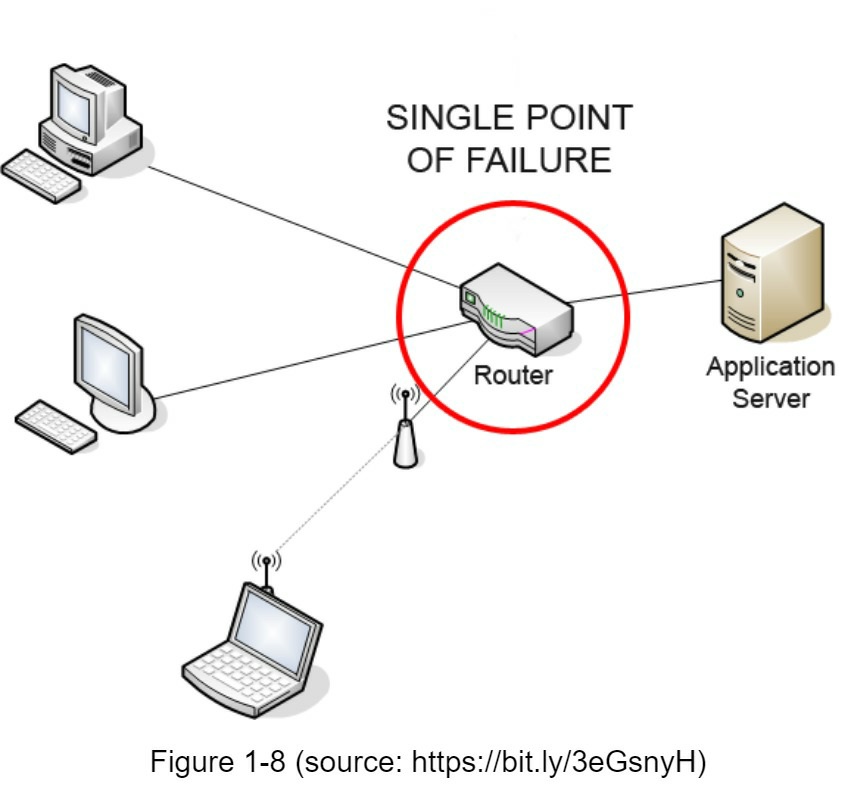
the data store and cache is challenging. For further details, refer to the paper titled “Scaling Memcache at Facebook” published by Facebook [7]. • Mitigating failures: A single cache server represents a potential single point of failure (SPOF), defined in Wikipedia as follows: “A single point of failure (SPOF) is a part of a system that, if it fails, will stop the entire system from working” [8]. As a result, multiple cache servers across different data centers are recommended to avoid SPOF. Another recommended approach is to overprovision the required memory by certain percentages. This provides a buffer as the memory usage increases.
- Eviction Policy: Once the cache is full, any requests to add items to the cache might cause existing items to be removed. This is called cache eviction. Least-recently-used (LRU) is the most popular cache eviction policy. Other eviction policies, such as the Least Frequently Used (LFU) or First in First Out (FIFO), can be adopted to satisfy different use cases.
Progress is saved on this device.