Video coming soon. Start with the reading below.
A CDN is a network of geographically dispersed servers used to deliver static content. CDN servers cache static content like images, videos, CSS, JavaScript files, etc.
Dynamic content caching is a relatively new concept and beyond the scope of this book. It enables the caching of HTML pages that are based on request path, query strings, cookies, and request headers. Refer to the article mentioned in reference material [9] for more about this. This book focuses on how to use CDN to cache static content.
Here is how CDN works at the high-level: when a user visits a website, a CDN server closest to the user will deliver static content. Intuitively, the further users are from CDN servers, the slower the website loads. For example, if CDN servers are in San Francisco, users in Los Angeles will get content faster than users in Europe. Figure 1-9 is a great example that shows how CDN improves load time.
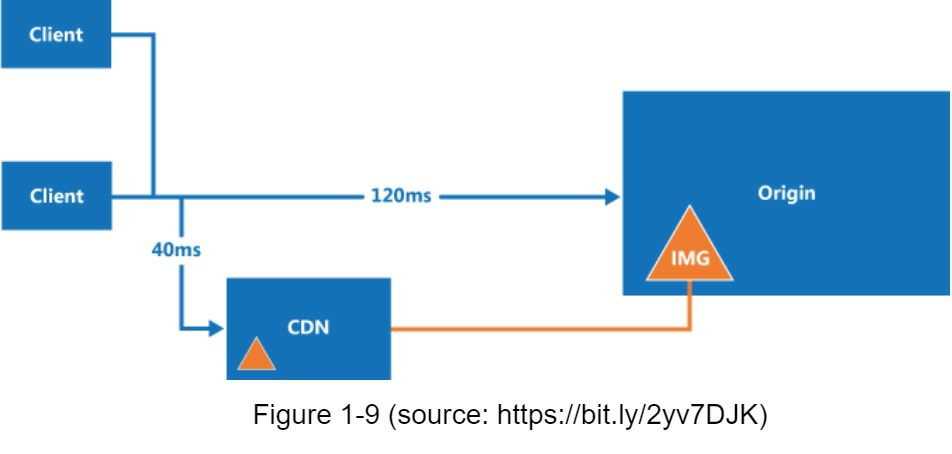
Figure 1-10 demonstrates the CDN workflow.
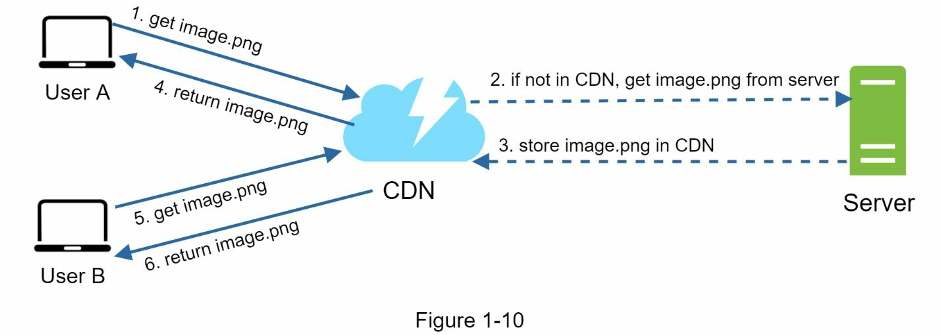
- User A tries to get image.png by using an image URL. The URL’s domain is provided by the CDN provider. The following two image URLs are samples used to demonstrate what image URLs look like on Amazon and Akamai CDNs:
- https://mysite.cloudfront.net/logo.jpg
- https://mysite.akamai.com/image-manager/img/logo.jpg 2. If the CDN server does not have image.png in the cache, the CDN server requests the file from the origin, which can be a web server or online storage like Amazon S3. 3. The origin returns image.png to the CDN server, which includes optional HTTP header Time-to-Live (TTL) which describes how long the image is cached.
- The CDN caches the image and returns it to User A. The image remains cached in the CDN until the TTL expires.
- User B sends a request to get the same image.
- The image is returned from the cache as long as the TTL has not expired.